What is mosto?
Is mosto alcoholic? In northern Spain — La Rioja, the Basque Country — mosto is unfermented grape juice. Zero alcohol. In Andalusia — Cádiz, Huelva, Seville, Málaga — mosto is a young fermented wine, around 9–12.5% ABV.
Same word. Completely different drink.
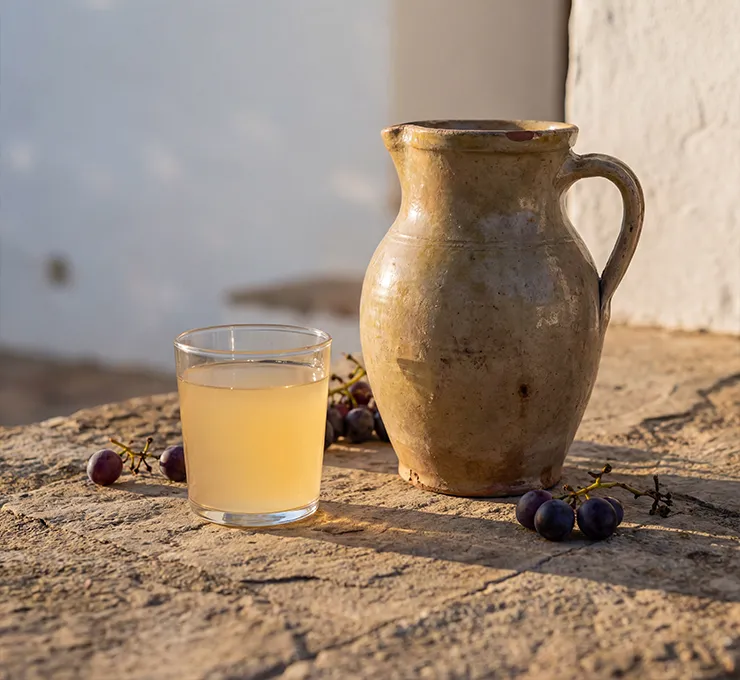
Is mosto grape juice or wine?
Strictly, mosto means “must” — the fresh juice pressed from grapes before fermentation turns it into wine. That’s the textbook definition, and across northern Spain it’s exactly right.
Ask for mosto in a Logroño pintxos bar and you’ll get cold, slightly sweet grape juice. It looks a bit like cloudy apple juice. It’s what people order when they’re driving, pregnant, or simply not drinking — festive, with none of the wine.
Cross into Andalusia and the same word means a wine.
Here mosto is the first wine of the season: grapes picked in September or October, fermented for roughly 40 days, on the table by late November. Cloudy, fruity, lively, faintly apple-ish — the grape in its most direct, unfiltered form. Locals call it vino niño: baby wine.
The closest thing abroad is France’s Beaujolais Nouveau — young, seasonal, drunk in celebration, never cellared. Mosto is just humbler and far less packaged.
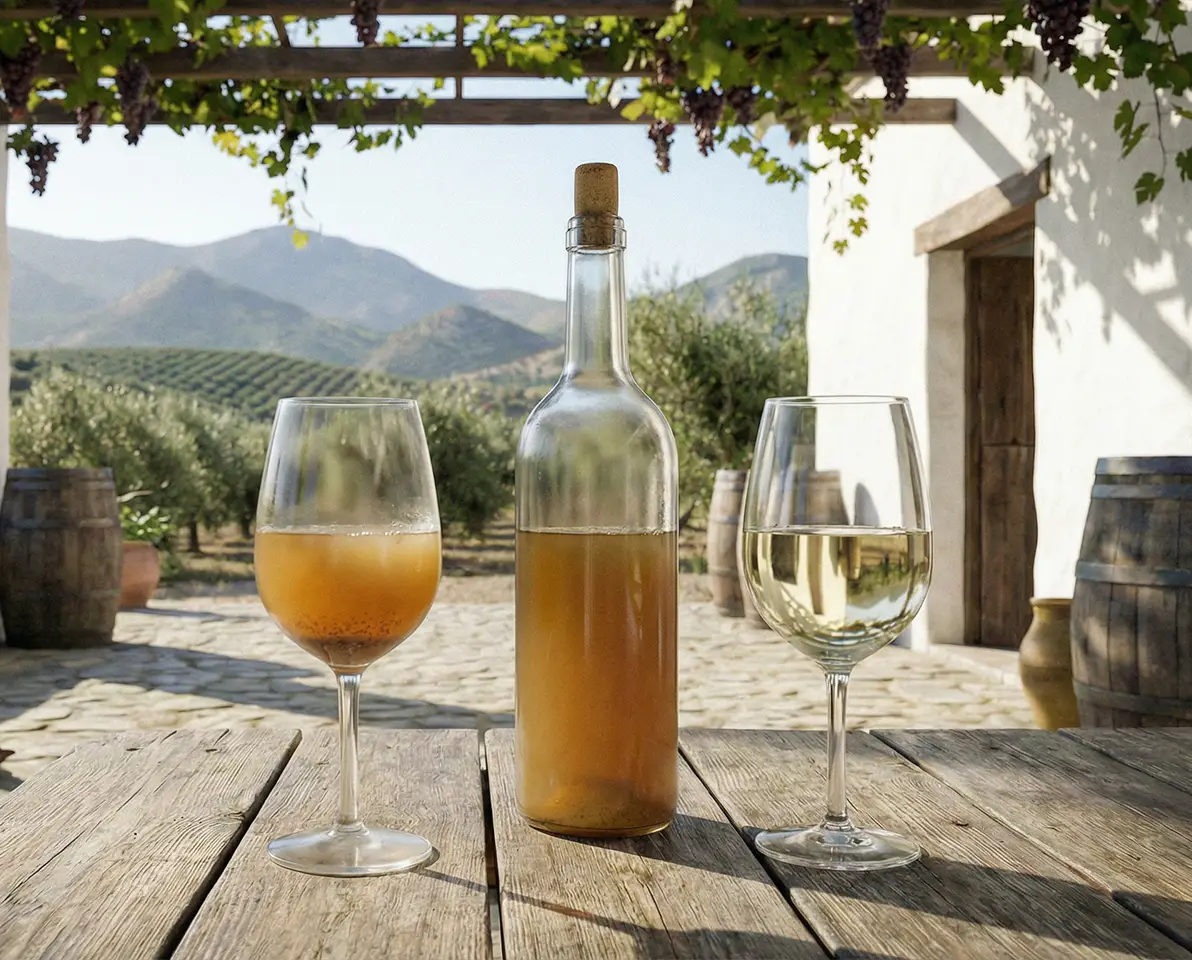
Where mosto means what
So before you order, know where you’re standing:
| Where in Spain | What "mosto" means | Alcohol |
|---|---|---|
| Northern Spain | Unfermented grape juice | None |
| Jerez / Cádiz | Young fermented wine (Palomino grape) | ~11–12.5% |
| Aljarafe, Seville | Young fermented wine (Garrido/Palomino) | ~11.5% |
| Condado de Huelva | Young fermented wine (Zalema grape) | ~11% |
| Serranía de Ronda, Málaga | Young fermented wine (local traditional varieties) | ~9–12% |
Most English-language travel writing only tells you the first row. Useful in Logroño; misleading in Cádiz — and the difference is whether there’s alcohol in your glass.
The version worth tracking down: Serranía de Ronda
Full disclosure: we’re based in the Ronda wine region, so we’re biased. But the mosto made in the villages of the Valle del Genal is the real reason to care about this drink.
The Roman town we took our name from — Acinipo, on a hilltop outside Ronda — minted coins stamped with grapevines in the 1st century BC. Acinipo means City of Wine. People have fermented grapes in these mountains for over two thousand years, and village mosto is the most direct living thread of that history.
Atajate: 187 people, very serious about mosto
Atajate is the smallest village in Málaga province — about 187 inhabitants, 745 metres up, 25 minutes from Ronda. You could drive past without noticing it.
You’d be missing the point. In the 1800s Atajate had over 30 working lagares (winemaking houses). Then phylloxera reached Málaga in the 1870s — Spain’s first regional outbreak — and wiped out the vines. Families left. Commercial winemaking stopped. The ruined lagares are still up in the hillsides.
But a few resistant vines survived, and a handful of families never stopped making their mosto. That thread runs unbroken to the festival held there today.
The grapes they still use — heritage varieties you won’t find in any modern bodega:
- Tempranillas — early-ripening, thick-skinned
- Perrunas — small, tart, thin-skinned
- De Rey — slightly sweeter
Uvas de Loja — prized as the finest for mosto
These are pre-phylloxera vines, kept alive family to family — not the varieties grown under DOP Sierras de Málaga.
How the mosto is made
Grapes are harvested by hand in September and October. In Atajate, some families still foot-stomp the grapes in stone lagares — no romanticism here, it’s just the method that works for small quantities. The juice goes into wooden barrels called bocoyes (traditionally made of chestnut wood, which doesn’t impart flavour) or glass carboys called majuanas.
Fermentation takes around 40 days. There’s a local belief in Atajate that you should never rack the wine on a cloudy day — folk wisdom that’s been passed down alongside the more technical knowledge. Once the liquid is transferred off the sediment (a process called trasiego), it’s ready.
By late November, the mosto is drinkable.
The timing is not accidental. The Fiesta del Mosto de Atajate takes place on the last Saturday of November, every year.
Is mosto alcoholic?
In Andalusia, yes — usually 9–12.5% ABV, like a light wine. In La Rioja and northern Spain, no — it’s grape juice with zero alcohol. Ask where you are before you assume.
Is mosto the same as wine?
Not quite. Mosto is wine at its youngest: fermented, but not aged, blended, filtered or stabilised, and drunk within the same season. Age and process it and it becomes a conventional wine.
What does mosto taste like?
Fresh, fruity and a little cloudy, with a characteristic apple-like note and lively acidity. It’s lighter and simpler than an aged wine — the grape in its most direct form.
When can you drink mosto?
Mosto season runs from late November through February or March. The 40-day fermentation cycle means the new harvest’s mosto is ready around St Andrew’s Day (30 November) — which is why traditional festivals happen at the end of November.
How do you pronounce mosto?
MOSS-toh — two syllables, stress on the first. The plural is mostos.
Sources: Ayuntamiento de Atajate — Fiesta del Mosto; Diputación de Málaga — Fiesta del Mosto de Atajate; Sherry Wine — The Must Season in the Marco de Jerez; Diario Ronda — Cartajima Cata de Mosto 2024; Universidad Pablo de Olavide — Vinos del Aljarafe: Mosto y algo más; Turismo del Aljarafe — El Mosto en el Aljarafe; Spanish Wine Collective — The Mosteros of Los Marines