Descalzos Viejos
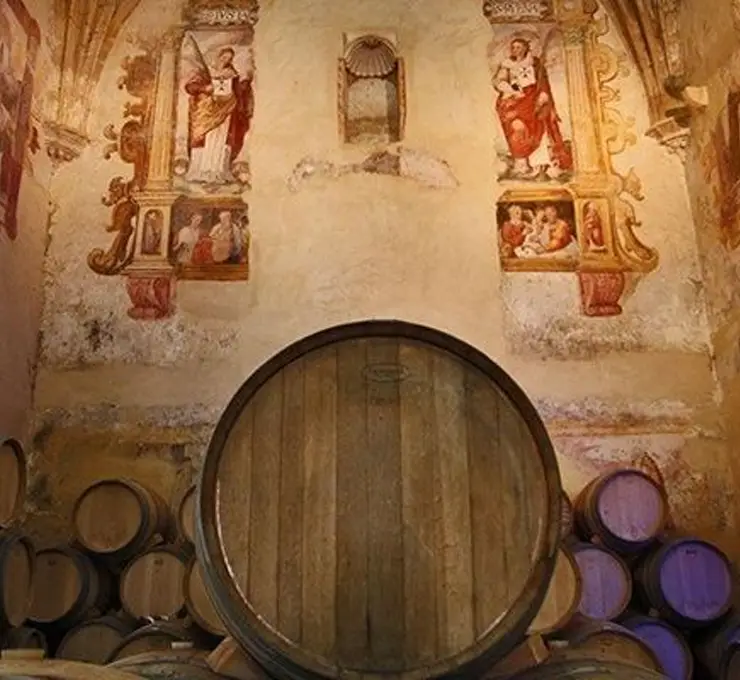
A 16th-century chapel turned barrel room — wine made beneath the eyes of two painted saints. One of the most extraordinary places in southern Spain to drink wine.
The barrel room used to be a chapel. The frescoes are still there — Santas Justa and Rufina, painted in the 16th century, looking down from the high altar at rows of French oak.
A convent, two architects, and no plan
“Architect by accident of birth,” says Flavio Salesi, “and winery owner by coincidence.”
Flavio is Italo-Argentine — born in the working-class Buenos Aires barrio of La Boca, trained as an architect, in Spain for decades with no plan to make wine. His partner, Málaga-born Paco Retamero, had shared a studio with him for over twenty-five years when they found the property.
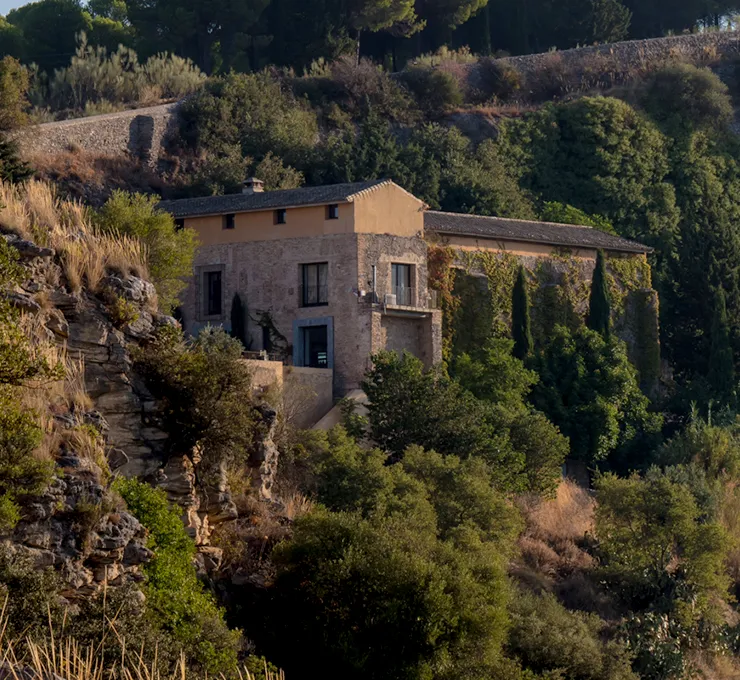
In 1998 they came across an abandoned Trinitarian convent on the edge of Ronda’s Tajo gorge. They bought it, as Flavio tells it, “simply because there was enormous beauty there.” They were in their thirties, the studio was busy, and they didn’t stop to think about the economics. Paco’s wife Chelo and Flavio’s wife Mariela — both doctors — came on board, and the four of them began what is now one of the most interesting wine projects in Andalucía.
Today Flavio lives on the finca full-time; the architecture studio still works from a space above the bodega. Asked to name a more special place, he pauses: “It is the place in Ronda and in the world. I’d have to think for a very long time.”
From ruins to winery
When they took over there were no vines — only the ruins of the church, the monks’ cells and a scattered olive grove. During the works, something unexpected surfaced beneath the earth: an Arab irrigation system, intact and centuries old.
"We bought it simply because there was enormous beauty there."
- Flavio Salesi
The building, Flavio admits, was “the easier part.” The field was the uncertain one. They planted vines on the lower terraces, turned the church into the barrel room, and assembled a working winery, an event space and a private home inside the same ancient walls. The restoration earned a Mención de Rehabilitación at the Premios Málaga de Arquitectura 2007 — recognition that, for two architects turned winemakers, still matters.
Visiting Descalzos Viejos
Visits are by appointment only. No walk-ins. Flavio lives here — it’s a private home as much as a winery, and that sets the tone. You arrive as a guest.
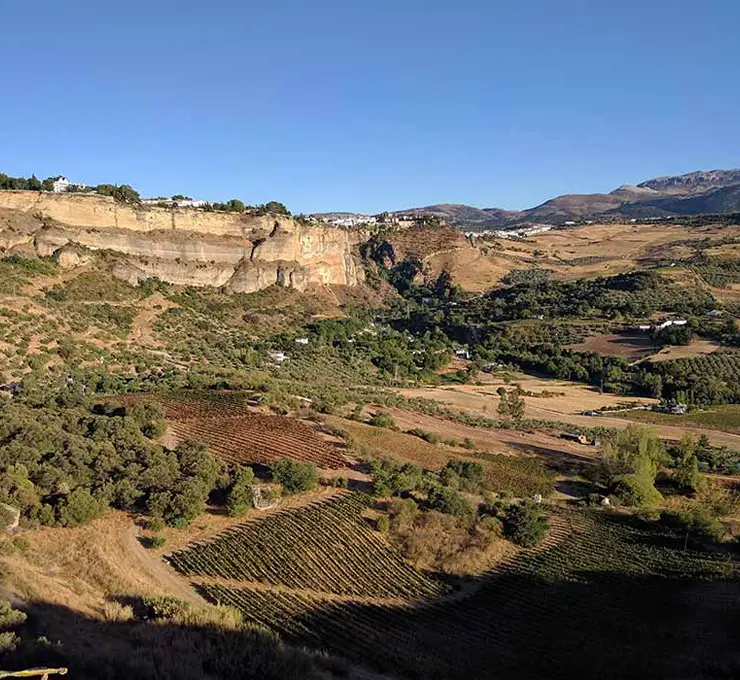
Whoever receives you actually makes the wine: Flavio, Paco or Vicente. No hired guide, no scripted tour. The visit usually takes in the gardens, the Arab water features, the lower vineyard seen from the cliff edge, the working cellar under the frescoes, and a tasting of three wines with Payoyo cheese and jamón. Groups up to around 30; couples and individuals welcome.
The bodega hosts live music through the year — jazz, flamenco, tango — in the chapel and gardens. Flavio draws no line between wine, music, architecture and family: “I’ve always been the same person for everything.” It shows.
The helicopter is run by HeliAir Marbella and listed for completeness. Most people take the forty-minute drive from Marbella, or the five-minute taxi from central Ronda, and find that quite enough.
Essentials
Experiences
| Activity | What's included | Price |
|---|---|---|
| Tour + tasting | Full visit, cellar tour with frescoes, 3 wines + cheese & charcuterie | ~€45 pp |
| Helicopter | Marbella–Ronda return + 2-hour private tour & tasting | €3,750. Up to 4 guests |
Getting there
The bodega is about 3 km from central Ronda — a 25-minute walk downhill from the old town along the river valley, or five minutes by taxi. By car, take the A-374 towards Grazalema and follow the sign on the left; the dirt access track is well signposted, but follow the Grazalema road signs rather than your GPS — satnav tends to misroute here.
The walk down is lovely. The walk back up, after a tasting, is brisk. The sensible plan: walk down, taxi back.
How they farm
The 16-hectare estate has around 10 hectares of vineyard across three plots at 600–650 metres, plus parcels farmed with neighbouring growers — with Descalzos Viejos running the viticulture and choosing what gets planted.
The winemaker is Vicente Inat, Valencian by birth and here for fifteen years. With Flavio, Paco and the core team — Rafael, Antonio, Begonia — the people making the wine have barely changed. “The team on this project is the same team from fifteen years ago,” says Flavio, “not counting the five years before that.”
The farming is organic in practice, not certified. Sheep graze between the rows to manage the cover and feed the soil. Native yeasts only. Night harvesting across every parcel — not just the premium plots.
On certification, Flavio is direct: “A logo, a seal — obviously. But the work comes first. We’ve farmed organically for seven years and changed a great deal. A seal is also a commercial strategy.”
"We're 20 kilometres from the Sahara. We had to stop applying French viticulture here and adapt it to what we actually have."
- Vicente Inat, winemaker
- +34 952 874 696
- info@descalzosviejos.com
- Partido de los Molinos s/n, Ronda, Spain
Gallery
FAQ
What is Bodega Descalzos Viejos?
Descalzos Viejos is a small, family-owned winery in Ronda, Málaga, housed inside a restored 16th-century Trinitarian convent on the edge of the Tajo gorge. Founded in 2000 by architects Flavio Salesi and Paco Retamero, who bought the abandoned building in 1998 and converted it into a working winery. The barrel room is the original chapel, with intact 16th-century frescoes of Santas Justa and Rufina above the barrels. The bodega produces around 35,000–40,000 bottles per year across six wines under DO Sierras de Málaga — Serranía de Ronda.
How do I visit Descalzos Viejos?
All visits are by prior appointment only — no walk-ins. Contact the bodega by phone (+34 952 874 696), WhatsApp (+34 607 167 482) or email (info@descalzosviejos.com) to arrange a date and time. The standard visit — a tour of the convent, cellar and frescoes followed by a three-wine tasting with local cheese and cured meats — costs approximately €45 per person plus VAT. Visits are led personally by the owners or the enologist.
What wines does Descalzos Viejos make?
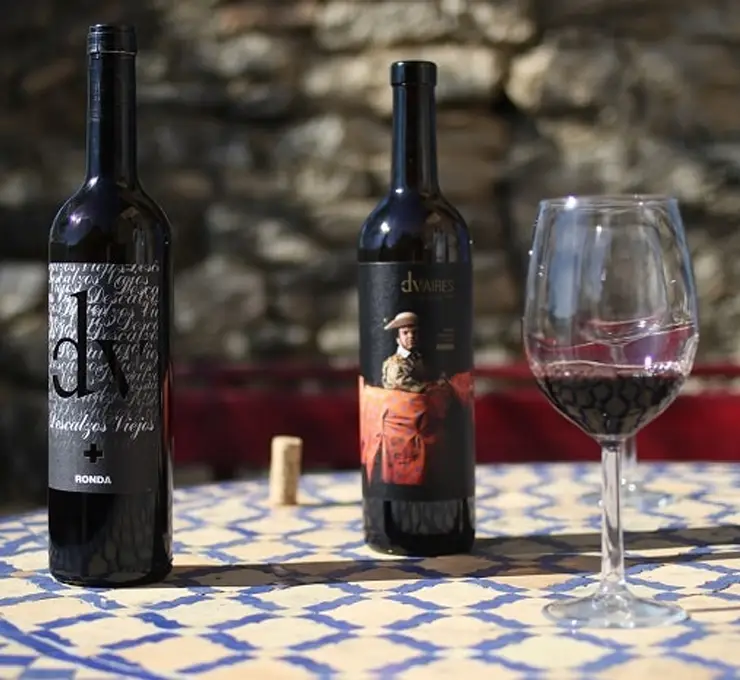
Six wines: one white (DV Chardonnay — always pre-sold before bottling) and five reds: DV (the everyday red blend), DV+ (Graciano-dominant, two Concours Mondial de Bruxelles gold medals), DV Aires (Petit Verdot + Garnacha, 16 months in oak), DV Las Santas Iusta (100% Garnacha) and DV Las Santas Rufina (100% Syrah, aged in Axarquía sweet wine-seasoned barrels). There is also a seventh wine, Dimitri — a biologically aged Chardonnay under flor, the first of its kind in the Serranía de Ronda — sold exclusively to restaurant Bardal in Ronda.
Are Descalzos Viejos wines organic?
The vineyard has been farmed organically for at least seven years — no synthetic pesticides or herbicides, native yeasts in the cellar, sheep grazing between the rows, and 95% manual field work. The bodega does not currently hold a third-party organic certification. Flavio describes certification as “a commercial strategy” — one they respect in others but have not pursued. If this matters to you, contact the bodega directly to confirm current practice before visiting.
Where can I buy Descalzos Viejos wines in the UK?
There’s no dedicated UK importer at the time of writing. The bodega’s own online shop (descalzosviejos.shop) ships within the United States only, so it isn’t an option from the UK. The realistic routes are a Spanish merchant that ships to the UK, such as Vinissimus — or, better, a case bought at the end of your visit and carried home. It tastes better for the story attached to it.
How far is Descalzos Viejos from central Ronda?
Around 3 kilometres — a 25-minute walk downhill from the old town, or five minutes by taxi. The bodega sits on the lower cliff face of the Tajo gorge, which means the walk back up to Ronda after a tasting is brisk. The sensible approach: walk down, take a taxi back.