Bodega Vetas
One hectare in Arriate, run by the family who planted Petit Verdot in Spain — and the bodega behind the best magnum wine in the country in 2026.
In April 2026, a panel of 16 professional Spanish tasters scored 548 finalist wines blind and put Vetas Mar de Tethys 2010 at the top of the list. Best magnum wine in Spain. 99 points. From a one-hectare family vineyard in Arriate, just outside Ronda.
This is the personal project of Juan Manuel Vetas — the winemaker who brought red wine back to Ronda in 1991 — and it has been quietly producing some of the most patient reds in the region for a quarter of a century.
Planting a region from scratch
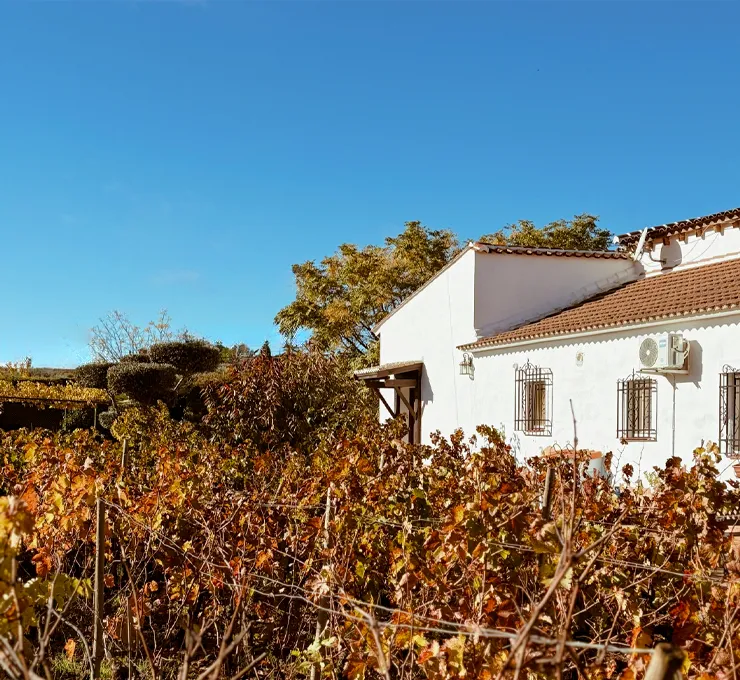
After fifteen years planting and consulting for other people’s wineries across Ronda — including the project that lit the fuse for modern Ronda red wine at Cortijo Las Monjas — Juan Manuel Vetas bought a one-hectare plot in Arriate in 2000, planted vines around his own house, and started making his own wine.
He planted what nobody else was planting: 80% Petit Verdot, with Cabernet Sauvignon and Cabernet Franc making up the rest. Petit Verdot is a Bordeaux grape that, almost everywhere else in the world, only exists as a small blending component. He’d been the first person to plant it commercially in Spain. He bet his own winery on it.
The bet has paid off — twice over the last three years — in the AkataVino national rankings.
The bodega is now run by his children, Javier and Sonia Vetas, with Juan Manuel still calling the date of harvest each year.
A sea bed at 780 metres
The vineyard sits on a plateau called Pago Finca El Baco, 780 metres up, ringed by the Serranía de Ronda. Five million years ago it was the bed of the Tethys Sea — and the soil still gives up marine fossils when you turn it. One of those fossils, a small spiral shell found in the vineyard, is the symbol on the label of the bodega’s most famous wine.
Practically, the soil is calcareous clay over limestone. It holds water through the dry Andalusian summer and drains after winter rains. Combined with the altitude — cool nights even in August — it gives small grapes with intense aromatics and natural acidity, ripened slowly through Ronda’s long, dry autumn.
Yields are tiny: around 500 grams per vine, roughly one bunch per shoot after green pruning. Everything is done by hand: harvest, sorting, bottling, corking, labelling. At this size, there is no other way.
The viticulture is organic in practice — no synthetic pesticides, herbicides or fungicides — and the cellar work is minimum-intervention, with bottling without filtration or fining and minimal sulphites. The family describes the wines as “vino natural.” No third-party organic certification is currently displayed.
Visiting Bodega Vetas
Vetas does not do walk-ins, and it does not mix groups. Every visit is private — your party only — and is hosted by Javier, Sonia, or occasionally Juan Manuel himself, in Spanish, English or French.
You walk the vineyard, see the cellar, hear the family’s story (Bordeaux, the Hohenlohe project, the decision to plant their own hectare), and taste through the range with charcuterie and cheese from the Serranía. About 90 minutes. Maximum 12 people per visit.
Essentials
Experiences
| Tasting | Wines included | Price |
|---|---|---|
| 3-wine | Colección or Rosé, Selección, Petit Verdot | €22 pp |
| 4-wine | Colección, Rosé, Selección, Petit Verdot | €26 pp |
| Premium | Colección, Selección, Petit Verdot, Mar de Tethys | €44 pp |
| Premium plus | All five wines, including Mar de Tethys | €48 pp |
The Premium and Premium Plus tastings are, in practice, the only realistic way for a visitor to try Mar de Tethys — production is too small for normal distribution.
Getting there
Pago Finca El Baco, Camino Nador s/n, 29350 Arriate. About 10 minutes by car from Ronda on the A-369. The final approach is rural and signposted from Arriate village. Take the address with you; the country road there does not love GPS.
The wines
Six wines. All from the same one hectare. All built around Petit Verdot.
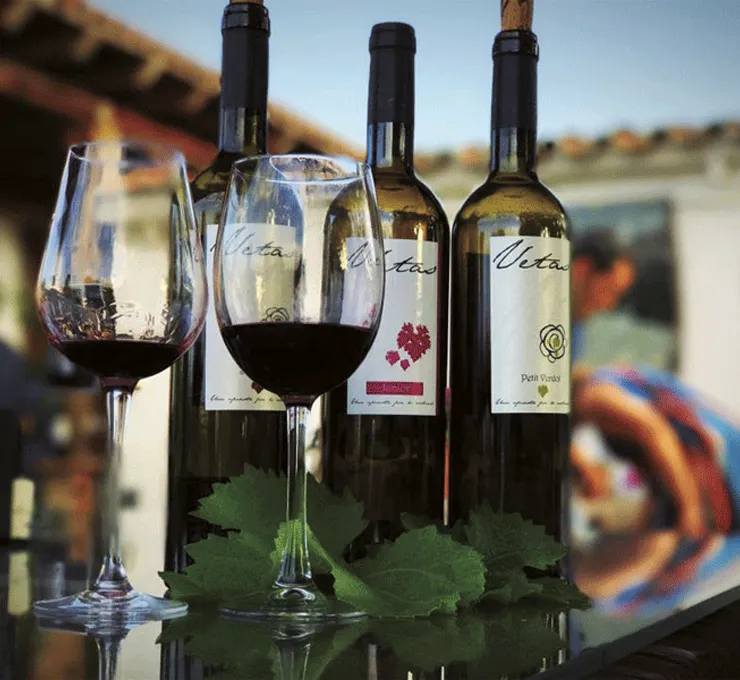
Vetas Junior — the entry point. Cabernet Sauvignon, Cabernet Franc and Petit Verdot, 6–10 months in third-fill French oak, then a year in bottle. Fruit-forward, smooth. Around €12–14.
Vetas Rosé — a saignée (bleed) rosé in the old Bordeaux mould, fermented slowly for up to 20 days. Dry, full-bodied, more structured than most Andalusian rosés. €12.
Vetas Selección — the long-aged blend. Roughly 40/40/20 Cabernet Sauvignon, Cabernet Franc, Petit Verdot. Up to two years in French oak, then four to five years in bottle before release. 93 points in Guía Peñín, gold at Premios Mezquita 2011. €30–45.
Vetas Petit Verdot — the wine that started the whole project. 100% Petit Verdot, free-run only, 20–22 months in new French oak, then five to six years in bottle. 93 points Robert Parker for the 2006. The first Spanish monovarietal Petit Verdot ever bottled. €37–45.
Vetas Colección 2019 — a more recent, slightly more approachable expression of the estate. 6 months in oak, 3 years in bottle. €68 from the bodega.
Vetas Mar de Tethys — the icon. 100% Petit Verdot, made only in vintages the family considers exceptional — three times in over twenty years. 24 months in new French oak, then 9 to 13 years in bottle. The label carries an actual strip of vineyard soil and the marine-fossil shell.
The 2012 finished second-best red wine of Spain at CIVAS 2023 (98 points). The 2010 magnum took first place in the magnum ranking three years later, against finalists from Rioja, Rías Baixas, Ribera del Duero and the great solera houses of Andalusia.
Mar de Tethys 2012 sells at the bodega for €75. The 2010 at €120. The magnum is by direct enquiry.
- +34 647 177 620
- info@bodegavetas.com
- Pago Finca El Baco, Camino Nador, 29350 Arriate, Málaga
Gallery

FAQ
What makes Bodega Vetas different from other Ronda wineries?
Size and obsession. Vetas is almost certainly the smallest registered winery in the Serranía de Ronda subzone — one hectare, fewer than 7,000 bottles a year — and the only one built entirely around Petit Verdot. Its founder, Juan Manuel Vetas, was the first person to plant the grape commercially in Spain, in 1991.
Can you visit Bodega Vetas?
Yes, but only by prior reservation — there are no walk-ins. Visits are private (your group only), hosted by the family in Spanish, English or French, and last about 90 minutes. Maximum 12 people. Book by email, WhatsApp, or via bodegavetas.com.
What is Mar de Tethys and why is it so prized?
It’s the bodega’s flagship: a 100% Petit Verdot made only in exceptional vintages, aged 24 months in new French oak and then 9 to 13 years in bottle before release. The 2010 in magnum was named Best Magnum Wine of Spain 2026 by AkataVino — 99 points, first place out of 548 finalists nationwide.
Where can I buy Vetas wines outside Spain?
The bodega ships directly from bodegavetas.com. Outside Spain, specialist Spanish wine merchants in the UK and Germany occasionally stock the Petit Verdot and Selección — Wine-Searcher is the best place to check current listings. For the rarer cuvées (Mar de Tethys, Colección), the realistic route is direct from the winery or a case bought on a visit.